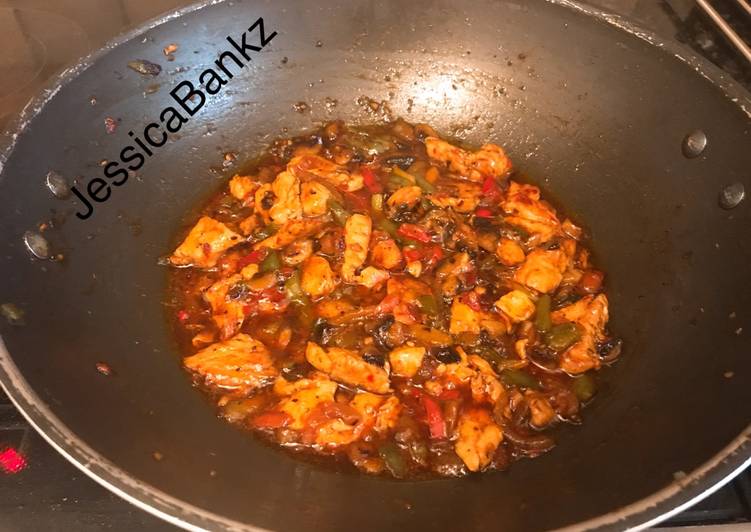
Hello everybody, hope you’re having an incredible day today. Today, I’m gonna show you how to make a special dish, a nagoya speciality misen-style taiwanese ramen. It is one of my favorites food recipes. For mine, I am going to make it a bit tasty. This will be really delicious.
A Nagoya Speciality Misen-Style Taiwanese Ramen is one of the most favored of recent trending foods on earth. It is easy, it’s quick, it tastes yummy. It is enjoyed by millions every day. They are nice and they look wonderful. A Nagoya Speciality Misen-Style Taiwanese Ramen is something which I’ve loved my whole life.
Nagoya : Taiwan-style ramen at Misen (味仙). Taiwan ramen is very spicy ramen developed by Misen based on Ta-a noodles in Taiwan. So, there's no "Taiwan ramen" in Taiwan and it is not Taiwanese food. They started with just one restaurant very close to Imaike Station but due to their success they can be found all over the city now.
To get started with this particular recipe, we have to prepare a few ingredients. You can cook a nagoya speciality misen-style taiwanese ramen using 7 ingredients and 7 steps. Here is how you cook it.
The ingredients needed to make A Nagoya Speciality Misen-Style Taiwanese Ramen:
- Take 100 grams Ground pork
- Take 2 clove Garlice (homemade pickled garlic with soy sauce)
- Get 5 Red chili peppers
- Make ready 2 tsp Doubanjiang
- Take 1/2 bag Bean sprouts
- Prepare 1/2 bag Chinese chives
- Get 2 portions Store-bought soy sauce flavoured ramen noodles
Located in Nagoya, Misen specializes in Taiwan-style ramen. But isn't Taiwan ramen from Taiwan? Why would they come to Nagoya to eat it? It is all mixed up so that it'll have a softer and milder taste than the Taiwan ramen.
Instructions to make A Nagoya Speciality Misen-Style Taiwanese Ramen:
- Roughly mince the garlic. Remove seeds from the red hot peppers. (You don't have to remove them completely.) Chop them into small rounds. Wash the bean sprouts. Wash the Chinese chives, and chop into 5 cm lengths.
- Pour a little bit of vegetable oil in a wok, and stir-fry the garlic, half of red chili peppers, and Doubanjiang.
- When fragrant, add the ground meat. When the colour of the meat changes, add the 1 tablespoon of soy sauce from the pickled garlic. Turn off the heat, and transfer to a plate.
- Please don't wash the wok from Step 2. Add the instructed amount of water on the package. I used 500 ml of water for 2 servings this time, and remaining red hot peppers, then turn on the heat.
- When the water from Step 4 starts to boil, add the sauce for the soup, and bring to a boil again, then turn off the heat. (Usually you have to turn off the heat before adding the sauce.)
- Boil water in a separate pot for cooking the noodles. When you add the noodles in boiling water, simultaneously add the bean sprouts to the Step 5 pot, and turn on the heat. Add the Chinese chives to the soup 30 seconds before the noodles are ready.
- Drain the noodles, pour the Step 6 soup over, and add the Step 3 meat on top, then done.
Why would they come to Nagoya to eat it? It is all mixed up so that it'll have a softer and milder taste than the Taiwan ramen. Because the Taiwan maze-soba is easier to eat, it became popular quickly all over Japan, while Taiwan ramen. Their rich and addictive soup is made with dried sardine broth, as well as a lot of time and care. The straight noodles are medium-thin, and they're a perfect match for the great soup.
So that is going to wrap this up for this special food a nagoya speciality misen-style taiwanese ramen recipe. Thank you very much for your time. I’m sure that you will make this at home. There’s gonna be interesting food in home recipes coming up. Don’t forget to bookmark this page in your browser, and share it to your loved ones, colleague and friends. Thank you for reading. Go on get cooking!